
On Demand Court Records In Oklahoma gives you instant access to civil, criminal, family, and probate cases from every participating district court. Search by docket number, party name, or filing date to get full PDFs with pleadings, motions, and judgments. Payments use 256-bit SSL encryption with credit cards or ACH. Fees range from $5 for a summary to $30 for a full docket. After payment, download or email your document right away. Each request is logged to follow the Oklahoma Open Records Act.
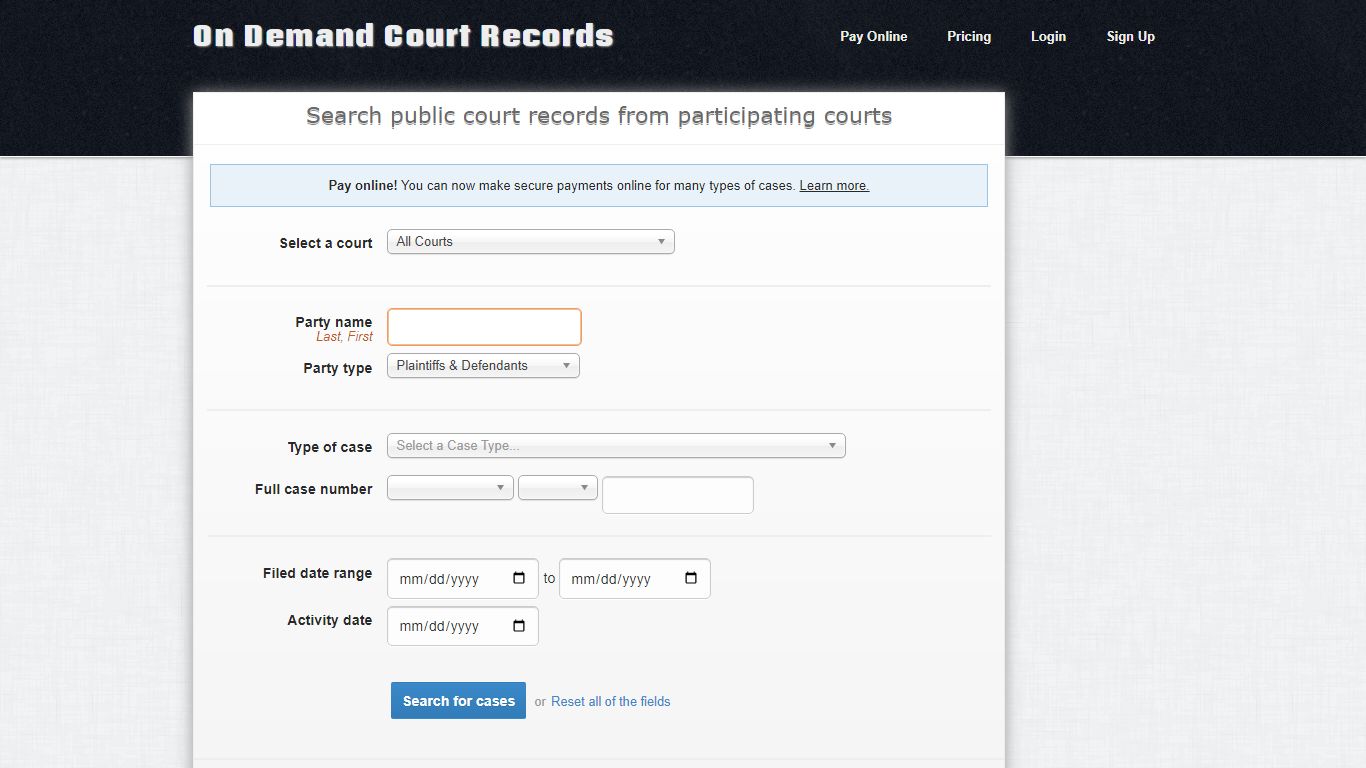
How to Search for On Demand Court Records In Oklahoma
Start by visiting an official on-demand portal like ODCR.com or OklahomaPublicRecords.com. Choose your search type: docket number, party name, or filing date. Enter the details and click search. The system shows matching cases with basic info like case type, status, and court location. Select the record you need and review what’s included—such as motions, orders, or final judgments. Confirm your selection before paying.

Types of Records Available Through On Demand Services
Civil cases include lawsuits over money, contracts, property disputes, and small claims. Criminal records show felony charges, misdemeanors, arrests, and sentencing details. Family law covers divorce, child custody, adoption, and domestic violence protection orders. Probate files list wills, estate settlements, guardianships, and name changes. Some services also offer traffic violations, liens, and judgment enforcement records.
Fees and Payment Options for Oklahoma Court Records
Most platforms charge between $5 and $30 per document. A summary page costs less than a full docket. Some sites bill per page—like $7 per page for original filings—or add surcharges for certified copies. Payments are secure using Visa, MasterCard, or ACH bank transfers. All transactions use 256-bit SSL encryption. Receipts are emailed instantly. No cash or checks are accepted online.
Instant Access vs. Certified Copies
Instant downloads give you a digital copy fast—usually within seconds of payment. These are great for research or personal use. But if you need a certified copy for legal proof, expect delays. Certified versions require clerk review and official stamps. Delivery takes 24–48 hours. Costs rise due to processing fees, often $0.15 per page plus a service charge. Only request certification when required by law or court.
Official Oklahoma State Courts Network (OSCN)
OSCN runs the state’s official docket system. It covers all district courts, the Supreme Court, and the Court of Civil Appeals. Users can search by case number, party name, or date. Results include real-time updates, clerk signatures, and timestamps. Downloads are free for viewing, but certified copies cost extra. OSCN follows the Oklahoma Open Records Act strictly. It’s the most trusted source for accurate, up-to-date records.
OklahomaPublicRecords.com Features
This site indexes records from 1995 to today. It pulls data nightly from the Oklahoma State Courts Network. Each entry shows docket numbers, filing dates, case types, party names, attorneys, and final orders. You can buy original filings as PDFs for $7 per page. The built-in citation tool formats references to match state court rules. Great for lawyers, researchers, or background checks.
StateRecords.org Coverage
StateRecords.org goes beyond court files. It includes criminal records, marriage and divorce certificates, birth and death records, and property liens. Filter by year (1990–2024), county, or document type. For court records, provide the case number, party names, and filing date. The clerk verifies details before sending a certified copy in 24–48 hours. Cost is $0.15 per page plus a small fee.
Free Access at the Oklahoma Judicial Center
Visit the Oklahoma Judicial Center in Oklahoma City to view records for free. The public terminal has data back to 1900. To get a certified copy, fill out Form 14, bring a photo ID, and pay $10 per page. Requests can be made in person, by mail, or phone at (405) 555-0123. Office hours are Monday–Friday, 8 am–4 pm. Fax service is available for urgent needs.
ODCR.com Security and Compliance
ODCR.com uses top-level security for all payments. Transactions are protected with 256-bit SSL encryption. Logs are kept for 12 months to meet audit needs. If a request is denied, you’ll get a written reason within five business days. The site follows the Oklahoma Public Records Act closely. Users receive instant download links with full metadata—like timestamps and clerk initials.
CourtRecords.org National Reach
CourtRecords.org combines federal and state records, including Oklahoma. Search by case number, party name, or document type. Up to 50 documents can be requested per day under the Freedom of Information Act. Processing costs $0.25 per page. The database updates every 12 hours. Certified copies cost an extra $12 each. Ideal for nationwide legal research.
Oklahoma District Courts Structure
Oklahoma has 26 judicial districts across 77 counties. Each handles civil cases under $200,000, felonies, family law, and probate. Use CourtCaseFinder.com to locate the right clerk’s office. View dockets by date range or request certified copies for $15 each. Appeals go to the Oklahoma Court of Appeals in Tulsa. This structure ensures local access with statewide consistency.
Reentry Resources and Legal Aid
The Oklahoma Office of Reentry links to criminal appeals, OSBI files, and the On Demand Court Record portal. Call (405) 555-2368 for help. The page includes guides for accessing civil and criminal records. Last updated in 2013, it remains a useful hub for people rebuilding their lives after incarceration. Always verify current info with the court directly.
Search Tips for Faster Results
Use exact names—middle initials help. Try different spellings if unsure. Include the county or district if known. Narrow by year or case type. Avoid vague terms like “John Doe.” For old records, check both digital portals and physical archives. Double-check docket numbers from other sources. The more precise your search, the quicker you’ll find what you need.
Common Reasons for Denied Requests
Some records are sealed by law—like juvenile cases or ongoing investigations. Others may be restricted due to privacy laws. If your request is denied, you’ll receive a written explanation. You can appeal or refile with more details. Always check if the case is still active or under seal before reapplying. Knowing the reason saves time and frustration.
Mobile Access and User Experience
Most on-demand sites work on phones and tablets. Menus are simple, forms are short, and downloads start fast. No app is needed—just a browser. Look for “mobile-friendly” tags on the site. Avoid public Wi-Fi when paying. Use strong passwords if creating an account. Screenshots and saved links help track your requests later.
Data Accuracy and Updates
Records refresh nightly from official sources like OSCN. New filings appear within 24 hours. Errors are rare but possible—always cross-check critical info. If you spot a mistake, contact the court clerk directly. Never rely solely on third-party summaries for legal decisions. Official documents carry the most weight.
Legal Use and Restrictions
You can use court records for background checks, research, or personal review. Selling or misusing them violates Oklahoma law. Do not post sensitive info online. Employers must follow FCRA rules when screening applicants. Landlords need tenant consent. Always respect privacy and use records responsibly.
Cost Comparison Table
| Service | Base Fee | Per Page | Certified Copy | Delivery Time |
|---|---|---|---|---|
| ODCR.com | $5–$30 | Included | $12 surcharge | Instant |
| OklahomaPublicRecords.com | $7 per page | $7 | $7 + stamp | Instant |
| StateRecords.org | $0.15 per page | $0.15 | $0.15 + fee | 24–48 hrs |
| Judicial Center (in-person) | $10 per page | $10 | $10 | Same day |
Why Choose On Demand Over In-Person Visits
On demand saves travel time and waiting in lines. You get results 24/7 from home or office. Digital copies are easier to store and share. No need to take time off work. For urgent matters, instant access beats driving across town. Just ensure your internet is secure and your device has enough space for large PDFs.
Understanding Docket Numbers
Docket numbers identify each case uniquely. They usually include the year, court code, and sequence—like “CJ-2023-1234.” Use this number for fastest searches. Find it on summons, letters, or prior records. If missing, try name-based searches instead. Keep docket numbers safe—they’re key to retrieving your file later.
What’s Not Available Online
Sealed, expunged, or juvenile records won’t appear. Some older files (pre-1990) may only be on paper. Grand jury materials and certain administrative hearings are exempt. If you can’t find a record, call the clerk’s office. They’ll explain why it’s not public and how to request it legally.
Protecting Your Privacy When Searching
Use private browsing mode to hide your activity. Don’t save payment info on shared devices. Log out after each session. Be cautious with personal details—only enter what’s needed. If researching someone else, ensure you have a lawful purpose. Oklahoma law protects against misuse of public records.
Customer Support and Help Resources
Most sites offer email or chat support. ODCR.com has a FAQ section and phone line. OSCN provides live help during business hours. For complex requests, visit the Judicial Center in person. Staff can guide you through forms and explain fees. Always keep your confirmation number for tracking.
Future of Digital Court Records in Oklahoma
Oklahoma continues expanding online access. More counties are joining the digital network. Plans include e-filing for all cases and mobile-friendly portals. Blockchain may secure document authenticity soon. These changes will make on-demand records faster, safer, and more complete. Stay updated through OSCN announcements.
Final Tips for Success
Start with OSCN for free searches. Use on-demand services when you need speed or certification. Double-check names and dates. Save receipts and confirmation numbers. Ask for help if stuck. Remember: not all records are public—know your rights and limits. With the right approach, you’ll get what you need quickly and legally.
Oklahoma Judicial Center
2100 N. Lincoln Blvd., Suite 4
Oklahoma City, OK 73105-4907
Phone: (405) 556-9400
Fax: (405) 555-7890
Hours: Monday–Friday, 8 am–5 pm
Frequently Asked Questions
People often ask how to get court records fast, whether they’re free, and what info is needed. Below are clear answers based on current Oklahoma law and official procedures.
How do I get a certified copy of an Oklahoma court record online?
You can’t get a certified copy instantly online. Most on-demand services provide digital downloads right after payment, but these aren’t certified. To get a certified version, you must request it separately. StateRecords.org and some county clerks offer this for an extra fee—usually $0.15 per page plus a processing charge. The clerk reviews your request, adds an official stamp, and sends it within 24–48 hours. You’ll need to provide the case number, party names, and filing date. Certified copies are required for legal proceedings, adoptions, or immigration. Always confirm acceptance with the receiving agency before ordering.
Are Oklahoma court records free to view?
Yes, but only at the Oklahoma Judicial Center in Oklahoma City. The public terminal lets you search and view records dating back to 1900 at no cost. However, printing or downloading certified copies costs $10 per page. Online portals like OSCN allow free searches, but full documents usually require payment. Some basic docket info—like case type and status—is free on most sites. For full pleadings or judgments, expect fees from $5 to $30. Free access doesn’t include certified or sealed records. If you’re on a budget, visit in person during business hours to minimize costs.
Can I search Oklahoma court records by name only?
Yes, most on-demand platforms let you search by party name. Enter the full legal name as it appears in court filings. Include middle initials if known—they help narrow results. Some sites also allow partial name matches, but this may return too many options. For best results, add the county, case type, or approximate year. Avoid common names without extra details. If you don’t know the exact spelling, try variations. Name searches work for civil, criminal, family, and probate cases. Always verify the docket number before purchasing to ensure you’re getting the right file.
What happens if my court record request is denied?
If your request is denied, you’ll receive a written explanation within five business days, as required by the Oklahoma Open Records Act. Common reasons include sealed records, ongoing investigations, juvenile cases, or missing information. You can refile with more details—like a docket number or exact filing date. If the denial seems incorrect, contact the court clerk directly. You may appeal to the district court or seek legal advice. Keep all correspondence for your records. Denials don’t mean the record doesn’t exist—just that it’s not publicly accessible yet. Always ask for the specific reason to improve future requests.
How far back do Oklahoma digital court records go?
Most online systems, including OSCN and OklahomaPublicRecords.com, include records from 1995 onward. These are updated nightly and cover all district courts, the Supreme Court, and the Court of Civil Appeals. Older records (pre-1995) may exist but are often only available in paper form at the Judicial Center. Some counties have scanned older files, but coverage varies. For historical research, visit in person or call the clerk’s office. The Oklahoma Judicial Center holds records dating back to 1900, but access depends on preservation status. Always check with the specific court for exact availability.
Is it legal to use Oklahoma court records for background checks?
Yes, but with important limits. Public court records can be used for employment, tenant screening, or personal research. However, employers must follow the Fair Credit Reporting Act (FCRA). This means getting written consent from the person being checked and providing a copy of the report if adverse action is taken. Landlords need tenant permission too. Never use records to harass, discriminate, or invade privacy. Expunged or sealed records must not be disclosed. Misuse can lead to fines or lawsuits. Always verify the purpose is lawful and document your process. When in doubt, consult a lawyer familiar with Oklahoma privacy laws.
Which website is the most reliable for Oklahoma court records?
The Oklahoma State Courts Network (OSCN) is the most reliable because it’s the official state system. It pulls data directly from court clerks and updates in real time. Other sites like ODCR.com and OklahomaPublicRecords.com are reputable but rely on OSCN feeds. For certified copies or disputed info, always cross-check with OSCN or visit the Judicial Center. Avoid unofficial aggregators that charge high fees without added value. Look for SSL encryption, clear fee structures, and compliance with the Oklahoma Open Records Act. OSCN remains the gold standard for accuracy, speed, and transparency.